thanksgiving
Thanksgiving Story Ideas for Kids: Put Your Family's Details on the Page
Thanksgiving is Thursday, November 26, 2026. These story starters help kids turn the people, food, and mishaps around the table into a book worth rereading.
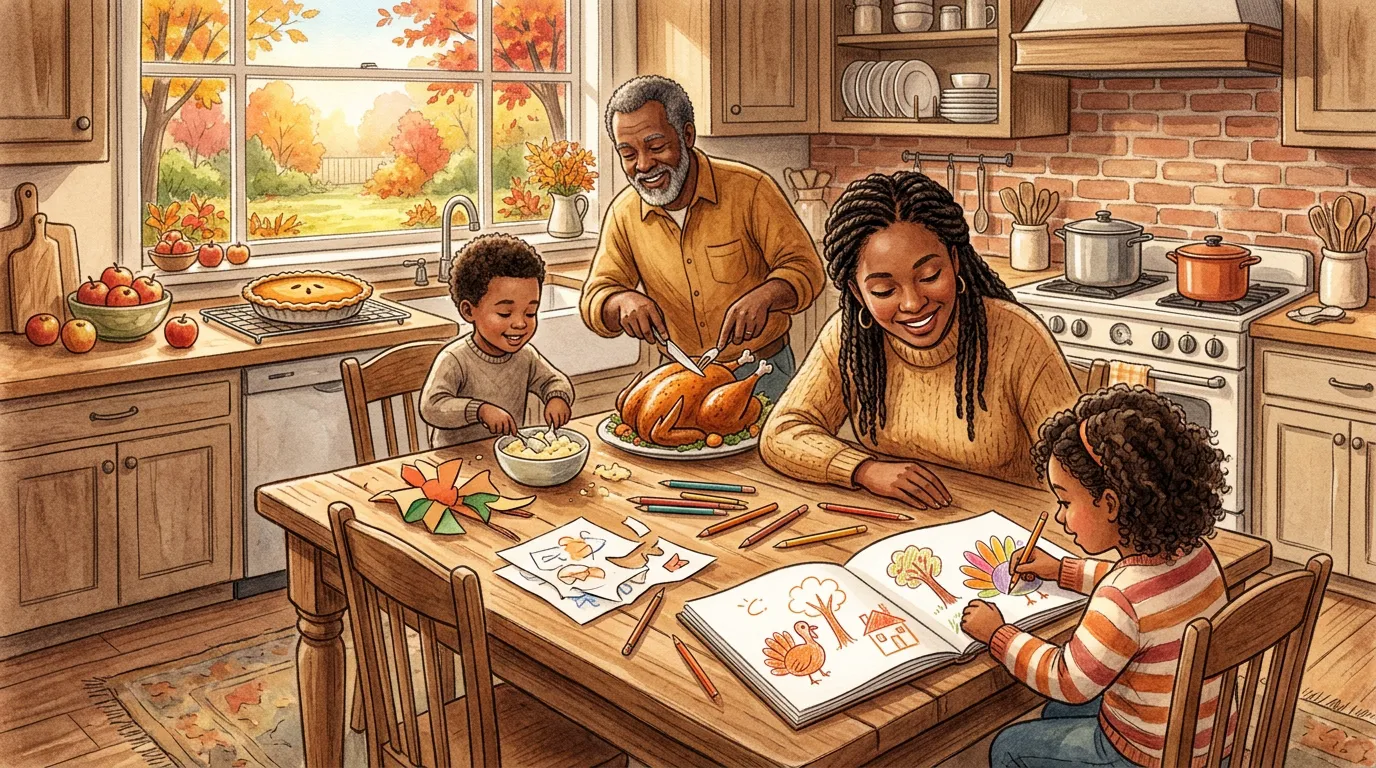
Thanksgiving lands on Thursday, November 26, 2026. A family gathering gives children plenty of material for a story, though not always the material adults expect. They may remember Uncle Jay dropping the rolls, the cousin who insisted on wearing a cape, or the way the whole kitchen smelled while the pie cooled on the counter.
Those details are the good stuff. A Thanksgiving story does not need to explain the holiday or make a speech about gratitude. It needs a child-sized point of view and one thing that goes a little sideways.
Find the moment your child keeps talking about
After a gathering, ask, "What was the funniest part?" Then wait. Do not offer suggestions too quickly. The answer tells you where the story lives.
If your child says, "The rolls were tiny," you have a story about a baker who accidentally makes bread for mice. If they say, "I got to stir the gravy," you have a story about a new sous-chef trusted with the most important spoon in the kitchen.
One small memory beats a full play-by-play of the day.
Three story starters with room for your own family
The Missing Recipe Card
Your child and a favorite grown-up are ready to make the one dish everyone expects. The recipe card has vanished. Their search takes them through the pantry, a coat pocket, and the old family cookbook. Add a real dish from your table and the person who makes it best.
The Parade Float in the Backyard
The neighborhood parade is canceled by rain, so the children build their own float from laundry baskets, cardboard, and couch cushions. The family pets become the judges. This is a good fit for a child who loves building, costumes, or a bit of harmless chaos.
The Pie That Needed a Helper
The pie is ready to cool, but an impatient squirrel, cat, or imaginary creature has a different plan. Your child must protect it while helping each family member find something they are good at. Let the ending be messy. A slightly lopsided pie is still pie.
Use gratitude as an action, not a slogan
Children understand appreciation through what people do for one another. Show the older cousin saving a seat. Show a neighbor bringing extra chairs. Show a child choosing the last roll for someone else, then discovering there are two more in the basket.
That lands more honestly than ending with a page where every character announces a life lesson.
You can also include people who are not at the table. A character might call an aunt in another state, wear Grandpa's apron, or set aside a slice for a parent coming home late from work. Family stories widen naturally when they are built from real care.
Capture the details before they blur
Keep a note open on your phone during the day. Add fragments, not polished sentences:
- red boots by the back door
- cinnamon on the counter
- Nora's cardboard crown
- Dad burns the first batch of rolls
- everybody laughs before the photo
Later, your child can circle the three details that belong in the book. This gives them authorship and saves you from trying to reconstruct the day from a vague memory in December.
Thanksgiving is often loud, crowded, and not quite on schedule. That is not an obstacle to a good story. It is usually the plot.
Give this year's family story a home in a personalized children's book.