classic children books
The 10 Best Children's Books of the '90s: A US Reading List
Rediscover ten of the best children's books of the 1990s in the USA, from picture-book originals to Goosebumps, Holes, and Harry Potter.
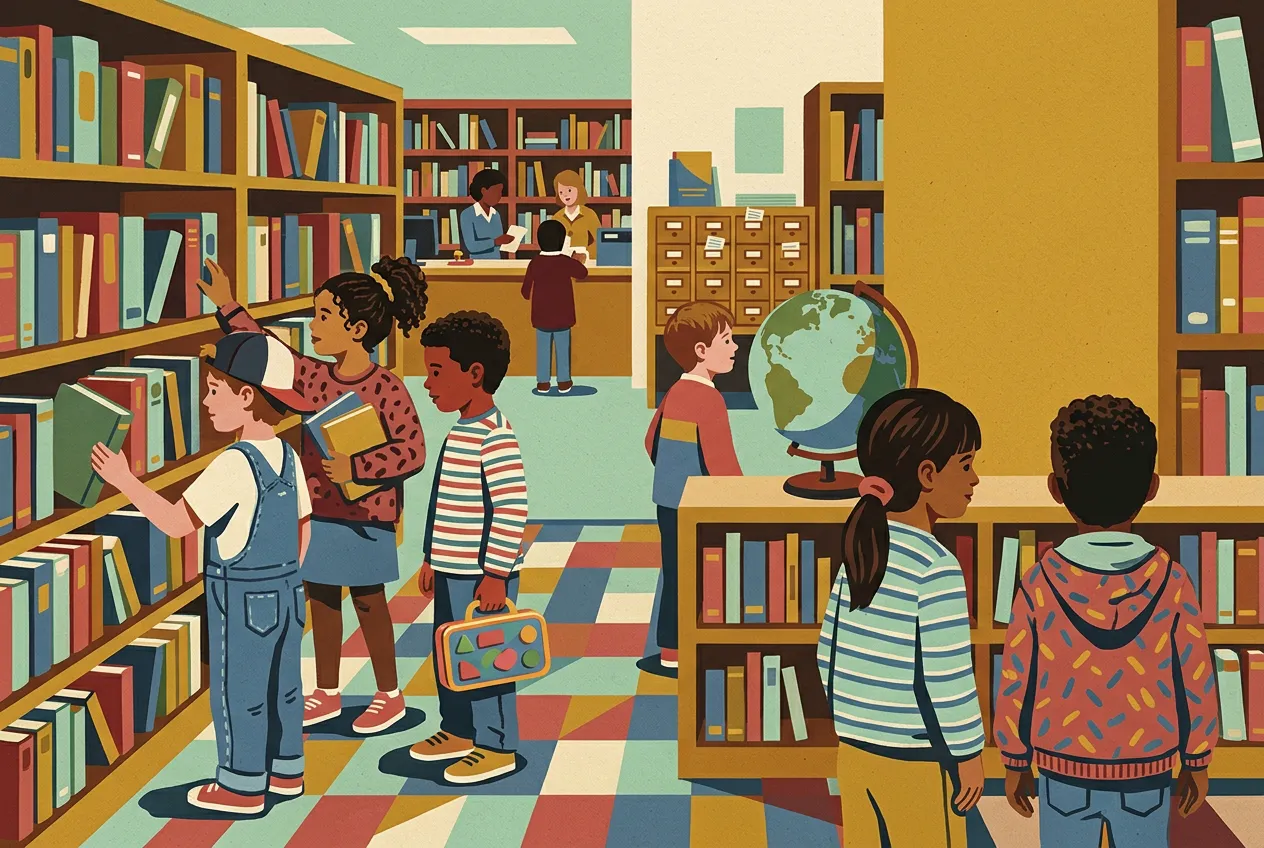
The children's books of the 1990s did not share one look or one idea of what young readers wanted. School book fairs offered shiny new series beside serious award winners. A 32-page picture book could be strange, funny, and formally inventive. A middle-grade novel could trust children with grief, injustice, or a genuinely unsettling choice.
This top ten is an editorial list, not a sales chart. Every selection was first published between 1990 and 1999 and had a meaningful life with readers in the United States. We looked for staying power, originality, and a mix of reading stages. That means picture books, early chapter books, scary paperbacks, and novels all get a seat at the same library table.
The list at a glance
| Rank | Book | Year | Best for |
|---|---|---|---|
| 10 | Tar Beach | 1991 | imaginative read-alouds, ages 5-8 |
| 9 | Officer Buckle and Gloria | 1995 | comic picture-book timing, ages 4-8 |
| 8 | Stellaluna | 1993 | animal lovers, ages 4-8 |
| 7 | The Kissing Hand | 1993 | first-day nerves, ages 3-7 |
| 6 | The Stinky Cheese Man and Other Fairly Stupid Tales | 1992 | fairy-tale rule breakers, ages 6-10 |
| 5 | Dinosaurs Before Dark | 1992 | new chapter-book readers, ages 6-9 |
| 4 | Welcome to Dead House | 1992 | kids who ask for something scary, ages 8-12 |
| 3 | The Giver | 1993 | thoughtful older readers, ages 11+ |
| 2 | Holes | 1998 | mystery and adventure fans, ages 10+ |
| 1 | Harry Potter and the Sorcerer's Stone | 1998 US edition | immersive family reading, ages 9+ |
10. Tar Beach by Faith Ringgold (1991)
Eight-year-old Cassie Louise Lightfoot lies on the roof of her Harlem apartment building and flies over the George Washington Bridge, claiming the city landmarks below as her own. The story moves freely between a child's real family life and the power of imagining a world without the barriers adults face.
Faith Ringgold adapted the book from her story quilt of the same name. The painted borders and quilt-like composition are part of the storytelling, not decoration around it. Tar Beach received a Caldecott Honor and the Coretta Scott King Award for illustration, but the better reason to read it is Cassie's bold, expansive voice.
Best fit: ages 5-8, especially as a read-aloud with time to study each spread.
9. Officer Buckle and Gloria by Peggy Rathmann (1995)
Officer Buckle gives safety talks that put students to sleep. Gloria, the police dog standing behind him, transforms those same talks into physical comedy. The joke depends on the reader seeing something the earnest officer cannot, which makes children active participants in every page turn.
The 1996 Caldecott Medal winner is also a sharp little story about collaboration and credit. Officer Buckle wants to be taken seriously; Gloria brings the audience; neither succeeds nearly as well alone. Its visual timing still lands without an adult having to explain why it is funny.
Best fit: ages 4-8 and anyone who likes spotting the joke before the main character does.
8. Stellaluna by Janell Cannon (1993)
After being separated from her mother, a young fruit bat lands in a bird's nest and tries to live like the chicks around her. Hanging upright, eating insects, and sleeping at night do not come naturally, but fitting in feels necessary for survival.
The book works as both an animal story and a story about changing yourself to belong. Cannon's illustrations make bats expressive without turning them into generic cartoon animals, and the factual notes invite curious readers to keep going after the narrative ends. Its conclusion values friendship without pretending real differences disappear.
Best fit: ages 4-8, with plenty for older siblings to notice too.
7. The Kissing Hand by Audrey Penn, illustrated by Ruth E. Harper and Nancy M. Leak (1993)
Chester Raccoon is afraid to go to school. His mother kisses the center of his palm so he can carry the feeling of home with him. The ritual is simple enough for a child to repeat, which helped the book become a first-day-of-school standard in American homes and classrooms.
Some children want a funny distraction when they feel anxious. Others want their worry named and taken seriously. The Kissing Hand is for the second kind of moment. It does not promise that separation will feel easy; it gives the child something concrete to do when it feels hard.
Best fit: ages 3-7 before preschool, kindergarten, camp, or another new routine.
6. The Stinky Cheese Man and Other Fairly Stupid Tales by Jon Scieszka and Lane Smith (1992)
The title page arrives in the wrong place. Characters interrupt one another. The table of contents collapses under a giant. Familiar fairy tales are shortened, scrambled, and treated with deep disrespect. Even children who believe they have outgrown "little-kid books" tend to lean closer.
This Caldecott Honor book is more than a collection of parodies. It shows young readers that a book is made from choices about type, page order, narration, and pictures, then turns every one of those choices into a joke. It is an excellent gateway to making new versions of stories children already know.
Best fit: ages 6-10, though adults may laugh at entirely different pages.
5. Dinosaurs Before Dark by Mary Pope Osborne (1992)
Jack and Annie discover a tree house filled with books. Pointing to a picture sends them into the past, where note-taking Jack and impulsive Annie encounter real dinosaurs. At fewer than 100 pages, the first Magic Tree House book offers chapters, suspense, and a complete adventure without looking impossible to a new reader.
Its larger achievement was the reading runway it created. Random House reports that the series has sold more than 134 million books worldwide since its 1992 debut. Once a child understands the tree house, every new volume offers a familiar structure and a different destination.
Best fit: ages 6-9 and readers ready to move from picture books to short novels.
4. Welcome to Dead House by R. L. Stine (1992)
The first Goosebumps book sends Amanda and Josh to a new house in a town where the children behave oddly and the shadows do not stay harmless for long. Its cliffhangers are shameless, its chapters are short, and its purpose is clear: make the reader turn one more page.
Scholastic launched Goosebumps as a monthly series in July 1992. At its mid-'90s peak, the publisher says it was selling four million books a month. Those numbers matter because the series reached many children who did not think of themselves as readers. It offered a repeatable promise: a little fear, a fast pace, and another title waiting at the book fair.
This opening volume is creepier than some later entries, so a sensitive reader may prefer to start elsewhere in the series.
Best fit: ages 8-12 for kids actively asking to be scared.
3. The Giver by Lois Lowry (1993)
Jonas lives in a community designed to eliminate pain, uncertainty, and difficult choices. When he is assigned to receive the memories that everyone else has surrendered, its calm order begins to look different. The premise is accessible; its implications become more complicated the longer a reader sits with them.
The novel won the 1994 Newbery Medal and became a classroom staple, sometimes flattened into a lesson about whether utopias are secretly dystopias. It is richer when read as a series of tradeoffs involving safety, freedom, memory, family, and language. The ending leaves enough unresolved to support real disagreement.
The book includes infant death, euthanasia, and emotional control. Those elements are not graphic, but younger readers may benefit from discussing them with an adult.
Best fit: ages 11 and up, especially for a family or classroom book discussion.
2. Holes by Louis Sachar (1998)
Stanley Yelnats is sent to Camp Green Lake for a crime he did not commit. There is no lake. Every day, the boys in the camp must dig a five-foot hole in the heat, supposedly to build character. The warden is looking for something, and Stanley's family history is tangled up with the search.
Louis Sachar weaves several timelines, a family curse, racial injustice, friendship, and an onion salesman into a plot where small details keep finding their place. The comedy never erases the cruelty of the camp. The novel won both the National Book Award for Young People's Literature and the 1999 Newbery Medal, a rare combination that matches its appeal to critics, teachers, and children.
Best fit: ages 10 and up for readers who enjoy mysteries that reward close attention.
1. Harry Potter and the Sorcerer's Stone by J. K. Rowling (1998 US edition)
The first Harry Potter novel was published in the United Kingdom in 1997 and arrived in the United States in September 1998 with a changed title. Scholastic says the initial US printing was 50,000 copies. Twenty-five years later, the series had sold more than 230 million copies in the United States alone.
Sales are not the reason it takes the top spot. The first book turned reading into a shared event for a generation: predictions at recess, waiting lists at libraries, midnight release parties for later volumes, and parents reading hundreds of pages aloud. Beneath the scale is a sturdy children's story about entering a new school, finding friends, breaking rules, and realizing that adults do not have every answer.
The book includes parental death, neglect, bullying, and peril. Families may also choose to discuss the public controversy surrounding the author. None of that changes the series' place in 1990s US reading culture, but it can shape how a family approaches it now.
Best fit: ages 9 and up, with shared reading for children who are new to long fantasy novels.
How to choose a '90s book for today's child
Start with the reading experience a child wants, not the title an adult remembers most fondly.
- Choose Officer Buckle and Gloria or The Stinky Cheese Man for visual comedy.
- Pick Stellaluna or The Kissing Hand for a gentler read-aloud.
- Try Dinosaurs Before Dark for a reader who wants chapters without a huge page count.
- Offer Welcome to Dead House to a child requesting real suspense.
- Save The Giver, Holes, and Harry Potter for readers who want to inhabit a larger, more complicated world.
An age label is a starting point. A seven-year-old may happily listen to a long novel while a ten-year-old finds exactly what they need in a picture book. Format is not a measure of intelligence.
What these books reveal about the 1990s
The decade made room for wildly different routes into reading. Goosebumps relied on a dependable monthly format. Magic Tree House made moving into chapter books feel manageable. The Stinky Cheese Man pulled the physical book apart for comedy, while Tar Beach brought the visual language of story quilts to picture-book readers.
The best titles also trusted children with more than a tidy moral. They offered unresolved endings, flawed adults, real loneliness, and jokes that ignored good manners. That trust is a large part of why they remain readable.
Older books can still require context. A phrase, stereotype, or assumption that passed without comment in the '90s may stand out now. Reading together makes room for a useful question: what would we keep, and what would we tell differently today? Close runners-up like Oh, the Places You'll Go!, Tuesday, and Bud, Not Buddy are proof that ten spots fill up fast once you start looking closely at the decade.
Make a story they will remember as their own
The books people remember from childhood often did one thing especially well: they made an imagined place feel personally important. A child can take that feeling one step further by entering a story built around their own name, interests, family, and favorite kind of adventure.
Give that feeling a new chapter: create a personalized children's book built entirely around your own child.